
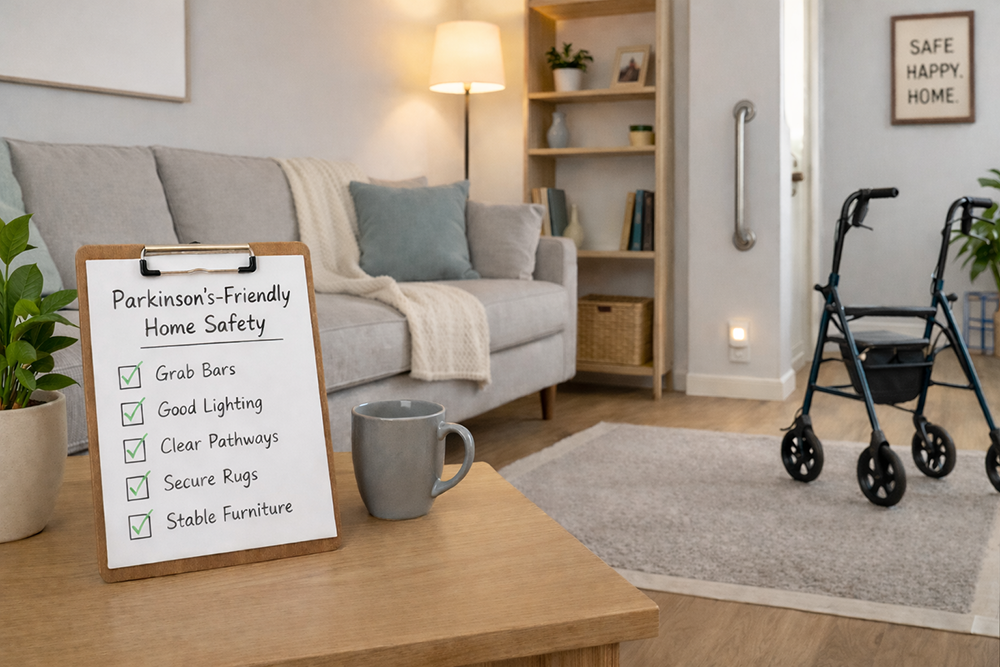
Creating a Parkinson’s-Friendly Home: Safety Tips That Matter
For individuals living with Parkinson’s disease, home should be a place of comfort, familiarity, and safety. However, as symptoms progress, everyday environments can begin to present new challenges, particularly when it comes to mobility, balance, and coordination.
How Parkinson’s Can Impact Safety at Home
Parkinson’s can affect movement in ways that increase the risk of falls and make daily routines more difficult. In particular, changes in balance, slower movement, muscle stiffness, and fatigue can all impact how someone navigates their space, making even familiar surroundings feel less predictable.
Fortunately, the good news is that small, thoughtful changes can make a meaningful difference.
Bathroom Safety
Bathrooms are one of the most common areas for slips and falls, making them an important place to start.
Simple changes can include:
- Installing grab bars near the toilet and in the shower/tub
- Using non-slip mats inside and outside the shower
- Adding a shower chair for extra stability
- Ensuring frequently used items are within easy reach.
These adjustments can help make daily routines like bathing and toileting safer and more manageable.
Lighting and Visibility
Good lighting can make a big difference in preventing accidents.
Consider:
- Adding brighter bulbs in hallways, stairways, and entryways
- Using night lights in bedrooms and bathrooms
- Reducing shadows by adding multiple light sources or using brighter bulbs.
Improved visibility helps individuals move more confidently throughout their home, especially during the evening or nighttime hours.
Flooring and Pathways
Clear, stable walking paths are essential for reducing fall risk.
Helpful changes can include:
- Removing loose rugs or securing them with non-slip backing
- Keeping walkways free of clutter, cords, or small furniture
- Ensuring floors are even and free of tripping hazards.
Creating open, easy-to-navigate spaces can make everyday movement feel safer and less stressful.
Furniture and Layout
The way a home is arranged can either support or hinder mobility.
To improve safety:
- Arrange furniture to allow for wider, unobstructed pathways
- Choose stable chairs with armrests to make sitting and standing easier
- Avoid low or overly soft seating that can be difficult to get out of.
Even small adjustments to layout can help reduce strain and improve overall comfort.
When Additional Support Can Help
Creating a Parkinson’s-friendly home doesn’t require a complete overhaul, just practical adjustments and the right support to ensure home remains a place of comfort, safety, and familiarity, while helping individuals live with greater confidence and peace of mind.
As needs change, making modifications to the home is just one part of the picture. Having the right support in place can further improve safety, comfort, and overall quality of life.
At Care At Home Services, we work with individuals and families to create care plans that fit naturally into daily routines. Whether it’s assistance with mobility, personal care, or simply having an extra set of hands around the home, our team is here to help.

